Source Supermarket Checkout Counter for Station Hotel Store
Compare 25 supermarket checkout counter options from verified suppliers in Jiangsu. These durable counters feature modern designs, stainless steel construction, and customizable sizes for supermarkets, convenience stores, and hotels; compare the available evidence and request quotations based on your requirements.
Key considerations
Products List


Comprehensive Sourcing Guide
Supermarket Checkout Counter Sourcing Guide
Sourcing a reliable supermarket checkout counter requires balancing functional durability with aesthetic integration into the retail environment. Buyers must evaluate how the unit supports high-volume transactions while maintaining a clean, modern appearance that aligns with brand identity. The decision involves selecting materials that withstand constant physical contact and ensuring the design facilitates efficient customer flow. This guide outlines the critical factors for selecting the right unit, from technical specifications to supplier verification, ensuring a procurement process that minimizes risk and maximizes operational efficiency.
Product Scope and Observed Listing Signals
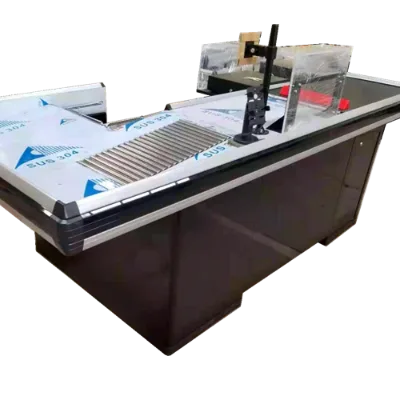
The market offers a variety of checkout solutions, ranging from simple service counters to complex integrated systems. Observed listings indicate a strong presence of metal-based units, particularly those constructed from stainless steel or steel composites, which are favored for their robustness in high-traffic areas. These units are frequently marketed for use in supermarkets, convenience stores, and drug stores, highlighting their versatility across different retail formats. The observed product names often emphasize their role as express cashier counters, suggesting a focus on speed and efficiency in transaction processing.
Visual and stylistic attributes also play a significant role in buyer selection. Many available units feature a modern style with neutral colors like grey or specific brand-aligned hues such as green. Some models include customizable elements, allowing retailers to tailor the appearance to their specific store layout. The presence of accessories like hooks suggests additional functionality for hanging promotional items or bags, adding value beyond the basic transaction surface. Buyers should carefully review these visual cues to ensure the unit fits the intended store aesthetic.
Technical Specifications to Verify
Dimensional accuracy is paramount for integrating checkout counters into existing store layouts. Standard sizes observed in the market include lengths of 1500mm, 1800mm, and 2000mm, with heights typically around 850mm for main tables. Some configurations offer side tables with dimensions like 600x600mm, providing additional workspace for bagging or scanning. Buyers must verify these measurements against their floor plans to ensure adequate clearance for customers and staff. Custom sizes are often available, but they may impact lead times and costs, so early confirmation is essential.
Material composition directly influences the longevity and maintenance requirements of the counter. Stainless steel bodies are common due to their resistance to corrosion and ease of cleaning, which is crucial in food retail environments. Some units combine steel with stainless steel elements to balance cost and durability. The absence of wood styles in many modern listings reflects a shift towards hygienic, low-maintenance materials. Buyers should confirm the specific alloy grades or finishes to ensure they meet the rigorous cleaning protocols of their facility.
Compliance and Safety Documentation
Regulatory compliance is a non-negotiable aspect of procurement, particularly for units used in public-facing retail spaces. Certifications such as CE mark the product as meeting European health, safety, and environmental protection standards, which is often a requirement for import into many markets. Buyers should request valid certification documents from suppliers to verify that the manufacturing process adheres to these regulations. The presence of ISO 9001 certification indicates that the supplier follows a quality management system, which can be a proxy for consistent product quality.
Safety features must be integrated into the design to protect both staff and customers. While specific test results are not always listed, buyers should inquire about edge treatments, stability testing, and electrical safety if the unit includes integrated lighting or power outlets. The use of eco-friendly materials is another growing trend, appealing to retailers with sustainability goals. Verifying that the materials used do not emit harmful volatile organic compounds (VOCs) is important for maintaining a healthy indoor environment. Buyers should ask for material safety data sheets (MSDS) where applicable.
Cost Drivers and Commercial Terms
Pricing for checkout counters varies significantly based on material quality, customization level, and order volume. Observed price ranges can span from affordable basic models to high-end, fully integrated systems, reflecting the diversity in features and build quality. Minimum order quantities (MOQ) typically start at one unit, allowing for small-scale purchases, but bulk orders may offer better per-unit pricing. Buyers should clarify whether the quoted price includes shipping, taxes, and any necessary installation components to avoid hidden costs.
Packaging and logistics are critical cost drivers, especially for international shipments. Units are often packed in wooden cases, export cartons, or standard packages to ensure safe transit. The choice of packaging can affect the overall weight and volume, influencing freight costs. Buyers should confirm the packing details to plan for warehouse storage and handling. Additionally, lead times can vary based on whether the unit is a standard model or a custom order, so aligning procurement timelines with store opening dates is crucial to avoid delays.
Supplier Qualification and Quality Control
Evaluating supplier credibility is essential to ensure long-term reliability. Buyers should prioritize suppliers with a proven track record in manufacturing retail furniture, particularly those located in established industrial hubs like Jiangsu Suzhou. The availability of OEM services suggests that the supplier can accommodate custom branding and design requirements, which is valuable for large retail chains. Verifying the supplier’s production capacity and quality control processes can help mitigate the risk of receiving defective or non-conforming products.
Quality control measures should be clearly defined before placing an order. Buyers should request samples or detailed photos of the production process to assess build quality. Inspections should focus on weld integrity, surface finish, and the functionality of any moving parts or accessories. Establishing a clear communication channel with the supplier for addressing issues during production can prevent costly mistakes. Buyers should also inquire about the supplier’s warranty policy and after-sales support to ensure they have recourse if problems arise post-delivery.
Long-Term Procurement Checks
Sustainability and lifecycle management are increasingly important considerations for modern retailers. Buyers should assess the durability of the materials to ensure the counter can withstand years of heavy use without significant degradation. Stainless steel and high-grade steel composites are preferred for their resistance to wear and tear. Additionally, considering the ease of repair and maintenance can reduce long-term operational costs. Buyers should ask about the availability of spare parts and the supplier’s willingness to provide technical support for repairs.
Adaptability to future retail trends is another key factor. As checkout processes evolve, the ability to upgrade or modify the counter to accommodate new technologies, such as self-checkout kiosks or advanced payment systems, is valuable. Buyers should look for modular designs that allow for easy reconfiguration. Regularly reviewing supplier performance and market trends can help buyers stay ahead of industry changes. Building a strong relationship with a reliable supplier can facilitate smoother future purchases and ensure consistent quality across multiple store locations.
FAQs
What customization options are available for supermarket checkout counters?
Customization is available for these supermarket checkout counters to meet specific needs. You can request different sizes like 1500, 1800, or 2000mm. The style is modern with grey or green colors. Materials include metal or stainless steel for durability in various retail environments.
Which certifications do these checkout counters hold for safety compliance?
These checkout counters hold CE and ISO9001 certifications for safety and quality compliance. Some models also meet SGS standards. These certifications ensure the products meet international requirements for use in supermarkets, hotels, and banks. Always verify specific model certifications before bulk purchasing.
Can I order supermarket checkout counters with a low minimum quantity?
Yes, you can order with a low minimum quantity starting from one unit. Some models require a minimum of two sets. The standard package or wooden case ensures safe transport. This flexibility allows small retailers to purchase without large initial inventory commitments.
How are these checkout counters packaged for international shipping?
Packaging varies by model, including wooden cases, export cartons, or standard packages. The wooden case offers robust protection for heavy metal units. Export cartons are used for lighter steel components. This ensures the counters arrive safely at destinations like airports or convenience stores worldwide.
What are the standard dimensions for the main table of these counters?
The main table typically measures 2000 by 600 by 850mm. Side tables often measure 600 by 600 by 850mm. Custom sizes like 1500mm or 1800mm are also available upon request. These dimensions fit standard supermarket layouts while providing ample workspace for cashiers.
Where are these supermarket checkout counters manufactured?
These counters are manufactured in Jiangsu Suzhou and other parts of Jiangsu province. The origin ensures access to established metalworking and steel fabrication industries. Products are shipped globally from these locations. Buyers can expect consistent quality from these established manufacturing hubs.
What materials are used to construct these checkout counters?
Materials include metal, stainless steel, and steel combinations for durability. Some models feature panel wood styles while others are fully metal. The body often combines steel and stainless steel. These materials ensure the counters withstand heavy daily use in supermarkets and drug stores.